“about coffee beans” search results (30000)

Cameroon achieved a total output of about 20, 000 tons of coffee beans in the coffee harvest year 2013-2014
According to the Investment Cameroon website on November 3, the 2013-2014 coffee harvest year in Cameroon ended at the end of September 2014. according to the Cameroon National Office for Cocoa and Coffee (ONCC), the total coffee bean production in the 2013-2014 coffee harvest year was about 20, 000 tons (of which Rob beans accounted for 95% of the total production), a decrease of 5000 tons from the last coffee harvest of 25000 tons. Out
2014-11-06 Coffee news coffee bean harvest coffee bean production Cameroon
Coffee dictionaries commonly used coffee terms about coffee beans
* Coffee cherry: the fruit of a coffee tree, named because its rind is bright red and its shape is very similar to cherries. * round beans: when the coffee fruit is growing, one of the two seeds develops very well, and the other seed is eaten so that the coffee bean that should be oval becomes round. * Elephant beans: bigger than ordinary coffee beans and usually insipid in taste. * Coffee
2015-01-26 Coffee dictionaries commonly used terms about coffee beans coffee cherries fruit because
The simplest roasting process of coffee beans talk about the roasting process.
The company's own brand coffee beans [Yikalama] (beans originally from Brazil, Nanshan roasting) will be fresh out of the pot soon. Today, let's simply popularize the baking process of coffee beans, but this is only the simplest baking process! The bean baking process of our company's [Yikalama] automatic coffee machine is much more complicated than this. If there are too many processes, I will no longer be here.
2015-09-11 The simplest coffee beans roasting process one company independent brand
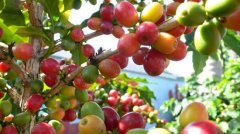
About Pacamara Coffee Bean planting China Coffee Network
The origin of the variety and name he is the variety derived from Maragogype and Paka Pacas. The first four letters of Maragogype and Pacas are combined into Pacamara, which is an excellent coffee variety developed in El Salvador. The granule of coffee is very large, which is close to about 21mm 22 mesh. It is the best coffee variety in South America in the past two years. Every country or farm hopes to find out the species.
2016-04-15 About Paka Mala varieties coffee beans cultivation China coffee names
How much do you know about the growing conditions and distribution of coffee
Coffee planting conditions and distribution 1. What is coffee? Coffee (Coffee) is derived from the Latin word Coffea (biological word name) and belongs to a member of the Rubiaceae family. These plants are all woody plants, most of which are distributed in the tropics, with more than 500 classifications and about 6000 varieties. Most of the Coffea plants are tropical evergreen bushes 5-6 meters high.
2014-07-30 Coffee planting coffee growing conditions coffee beans
About coffee beans, coffee practice, coffee roasting, boutique coffee beans.
Most of the Tanzanian beans are grown in Mr. Kilimanjaro and Mt, near the northern Kenyan border. The Meru area, often called "Clemangaro", is occasionally named after the distribution center Moshi or Arusha. In addition, a little washed Arabica beans are produced on the south side of the border.
2016-06-16 About coffee beans common sense coffee practice baking boutique
Common sense of roasting of coffee beans Chemical reaction of coffee in roasting
Coffee has a rich, wide range of flavors. Coffee produced in different regions, different elevations, different climates and different producing areas has its own unique characteristics. Raw beans are fragrant and have no usual coffee taste at all; the taste of coffee comes from proper roasting. Show fruity (light roasting) or caramel sweetness (deep roasting). The lighter the baking, the more sour it tastes. Baking.
2015-05-28 Coffee beans roasting common sense coffee medium chemistry reflection possession rich
Understand that coffee beans grow around the equator
Coffee beans grow in tropical or subtropical agricultural gardens centered around the equator called coffee belts and travel to Japan with ships. When the brown coffee beans appear in front of your eyes, they have actually gone through a variety of different circulation processes and the hands of many people. Coffee is widely distributed in South America, Central America, the West Indies, Asia, Africa, Arabia,
2015-06-05 Understand coffee coffee beans longer than the equator as the center
Cameroon achieved a total output of about 20, 000 tons of coffee beans in the coffee harvest year 2013-2014
According to the Investment Cameroon website on November 3, the 2013-2014 coffee harvest year in Cameroon ended at the end of September 2014. according to the Cameroon National Office for Cocoa and Coffee (ONCC), the total coffee bean production in the 2013-2014 coffee harvest year was about 20, 000 tons (of which Rob beans accounted for 95% of the total production), a decrease of 5000 tons from the last coffee harvest of 25000 tons.
2016-09-05 Cameroon 2013-2014 Coffee Adult realization Coffee Bean Total output
The Chemical reaction of Fine Coffee Technology in Baking
Coffee has a rich, wide range of flavors. Coffee produced in different regions, different elevations, different climates and different producing areas has its own unique characteristics. Raw beans are fragrant and have no usual coffee taste at all; the taste of coffee comes from proper roasting. Show fruity (light roasting) or caramel sweetness (deep roasting). The lighter the baking, the more sour it tastes. Baking.
2014-11-14 Coffee knowledge coffee technology coffee roasting chemical reaction
Basic knowledge of roasting coffee beans skills of roasting coffee beans
All the guests who come to the coffee workshop will ask the same question. What are the benefits of baking at home? Every day I come into contact with all kinds of people [people who are about to enter the world of coffee] and [people who want to bake coffee out of interest], but everyone is confused about how to answer this question. "No, just simply say what you imagine.
2015-05-28 Coffee beans roasting basics common sense skills come attend coffee lectures will
Coffee knowledge introduces the distinction between raw beans, new beans and old beans
After dry and wet processing, coffee fruit becomes coffee raw bean (Raw bean/Green bean). The main components of raw beans are: carbohydrates, about 49%; moisture, about 12%; protein. About 11%; chlorogenic acid, about 7.6% alkaloids and trace elements, about 0.4%. According to the length of time, raw beans can be divided into: seasonal beans (Current Cro)
2014-12-30 Coffee knowledge introduction raw beans new beans old beans distinction coffee fruit pass
How about Nicaraguan coffee to tell you about Nicaraguan coffee? Boutique coffee Nicaragua
Nicaragua coffee is obscure compared with Guatemala coffee. Compared with high mountain beans in Guatemala, Nicaraguan beans are more balanced and lack a little of their own characteristics. Its particles are moderate in size, mild in taste and very aromatic and mellow. Nicaragua is located in central Central America, and the best coffee in Nicaragua is produced in Mataga.
2016-03-19 Here you go talk about Nicaragua coffee how about boutique Nicaragua Nica
Three things about baked beans (1)
With regard to the three things about baked beans (1) many people say that cheap beans are very cheap, which is also strange. Cheap beans are mostly sold as commercial beans. At present, under the vigorous promotion of high-quality coffee, it seems that it is dishonorable to use commercial beans. However, the production of boutique coffee baked by self-bakers.
2014-09-01 Baked beans roasted coffee beans
How much do you know about the quality of coffee?
We often drink coffee in our daily life, but how much do you know about the quality of coffee? In the eyes of real coffee lovers, small coffee beans can also distinguish between male and female, which is commonly known as male beans and female beans. In China, we basically do not have access to public bean coffee, so no business will tell you that coffee beans are divided into male and female, but coffee from the same place of origin is actually
2015-09-24 Coffee quality you know how much daily life we often drink coffee
Can deeply roasted coffee beans be blended?
Roasting process: the first 9 minutes: once the coffee is roasted, only 3 minutes, the beans begin to give off the smell of grass. In about 5 minutes, the beans will swell and the color will change from green to yellow and then golden yellow. At this time, the smell changes, and it is similar to roasted wheat. About 9 minutes later, caffeine began to wrinkle and seemed to disappear. The first pop-up sound: around 10 minutes later
2016-06-30 Depth roasting after coffee beans can carry out match roast process 9 points
Variety classification of high-quality coffee beans and knowledge coffee
Coffee beans (Coffee Bean) can be divided into three types, namely Arabica-coffee contains caffeine of about 1% per cent by weight. Generally speaking, the better quality and more expensive coffee beans come from coffee beans grown by Elaraby. It accounts for 3/4 of the world's output and is of good quality, because the coffee tree itself is sensitive to heat and humidity.
2015-01-26 Boutique coffee beans knowledge coffee varieties classification Coffee
Varieties of coffee beans
According to the variety of coffee beans (Coffee Bean) can be divided into three types of coffee beans are: Arabica coffee contains about 1% per cent by weight of caffeine, generally speaking, the better quality, more expensive coffee beans, are from Elaraby (Arabica) coffee beans. Accounts for 3/4 of the world's output, good quality, due to the coffee tree itself
2014-06-26 Boutique coffee beans individual coffee beans coffee bean types
Coffee beans grow in countries that produce coffee beans at the center of the equator.
Coffee beans grow in tropical or subtropical agricultural gardens centered around the equator called coffee belts and travel to Japan with ships. When the brown coffee beans appear in front of your eyes, they have actually gone through a variety of different circulation processes and the hands of many people. Coffee is widely distributed in South America, Central America, the West Indies, Asia, Africa, Arabia,
2015-09-23 Coffee beans longer than equator center producing country coffee beans for medium